QUEER GIRL OVERTURE
I have this dream where I am not afraid to hold your hand in Texas. This dream where I don’t have a visceral reaction to seeing gay pride flags. This dream where I can invite you home for Christmas dinner and my mother is so kind to you. And she asks where you went to school and she doesn’t choke on your gender identity and she pulls me aside later to tell me how sweet you are. I have this dream where people on the internet stop changing the pronouns in my poetry. I have this dream where I know exactly what to say when my Southern Baptist relatives ask if I’m dating someone. I have this dream where I don’t have to keep coming out over and over. Where people don’t think my sexuality is a phase unless I can produce a girlfriend on command. Where people stop asking me who fucks better, men or women. Like those are the only options. Like the answer wouldn’t be a gross generalization. I have this dream where people aren’t always waiting to say, “maybe you haven’t found the right guy.” Where I don’t imagine them jumping out from behind doors and bushes and shower curtains to say, “I hope you get over this in time to have children of your own.” I have this dream where all of my queer representation isn’t murdered on TV. I have this dream where my queer friends aren’t murdered on the news. I have this dream where I feel safe. In rural Kansas. At my grandparents’ house. In a gay bar. At Pride. I have this dream where I only write you love poems and none of them have to say, “I’m so glad we’re alive.”
RAFIKI BFI Flare Special Presentation | BFI London Film Festival 2018
RISING
“Have I told you about Sappho? Always overcome with longing. Chasing honey and the bee. Calling my name night after night. Calling me down from the mountain. Now she is remembered by the love she kept trying to give everyone else.” Mateer, T. (2019). Aphrodite made me do it. Central Avenue Publishing.
“Sweet mother, I cannot weave — slender Aphrodite has overcome me with longing for a girl.” - Sappho (tr. Diane Rayor)
Portait of a Lady on Fire (2019)
“20,000 Dykes ignite DC” on April 24, 1993, The Lesbian Avengers breathe fire in front of the White House during a Dyke March, a march organized by the Lesbian Avengers.
“SHE” by Dodie Clarke
Am I allowed to look at her like that Could it be wrong when she’s just so nice to look at And she smells like lemongrass and sleep She tastes like apple juice and peach Oh, you would find her in a polaroid picture And she means everything to me (Oh) I’d never tell No I’d never say a word And oh it aches But it feels oddly good to hurt She smells like lemongrass and sleep She tastes like apple juice and peach Oh, you would find her in a polaroid picture
And she means everything to me Oh, oh Oh, oh and I’ll be okay Admiring from afar Cause even when she’s next to me We could not be more far apart Cause she tastes like birthday cake, and storytime, and fall But to her I taste of nothing at all And she smells like lemongrass and sleep She tastes like apple juice and peach You would find her in a polaroid picture And she means everything to me Yes she means everything to me She means everything to me.
Introduction
The anthology is a collection of poems, movies, visual art, and a song, all that center a narrative of love in lesbian relationships and the tentative nature within them due to political and social hostility. Each piece emulates love and longing but contains an underlying fear of backlash. Genuine connection is central to human’s existence and interactions in the world and when the pureness of relationships is tainted by public disdain and harm, those relationships are damaged and complicated. As a lesbian, these pieces aided me in understanding my previous relationship and coming to terms with the obstacles I face as a minority. The stories of others and the history of the lesbian community are vital as they offer a community for me and others who identify as a woman who loves women.
“Queer Girl Overture”, written by Trista Mateer, is placed at the beginning of the anthology as it symbolizes the demanding desire of many lesbians to exist without fear of being hurt and shamed for who they love. The strength in this poem is the visceral images of unattainable desires for acceptance that are both universal and personal. While not all queer girls are in rural Kansas or have Southern Baptist relatives, queer girls struggle with queer representation being murdered on TV and coming out over and over again. In the poem, there is pent-upis a pent-up desire to love and express oneself freely. The repetition of “I have a dream” represents the overwhelming nature of the queer girl’s desire and holds a sense of exhaustion for the stagnancy of homophobia. When the dreams step outside of the pattern, they are especially intense, especially the first instance: “And she asks where you went to school and she doesn’t choke on your gender identity and she pulls me aside later to tell me how sweet you are.” The line represents the bottled emotions and opinions that the daughter feels unable to tell her mother and the tension in her familial bonds. There is a sense of release and catharsis in the act of stating one’s truth. Her dreams introduce the social and political barriers that queer girls and the queer community as a whole face in relationships. Unwillingly, their love is allowed to be scrutinized by others in all contexts. This is highlighted in the lines: “In rural Kansas. At my grandparents’ house. In a gay bar. At Pride.”. To conclude her poem, she dreams that she doesn’t have to tell her girlfriend “I’m so glad we’re alive” because there are so many threats to their existence.
Next in the anthology is the film “Rafiki”, directed by Wanuri Kahiu, which follows two young women in Kenya who fall in love and navigate in a society where homosexuality is criminal. This film is particularly captivating as the film was banned in Kenya, the country it was set and filmed, because of its positive presentation of the LGBTQ+ community. The relationship between Kena and Ziki is gentle and loving and resilient and stunning when recognizing the fear and the strain hiding the relationship from friends, family, and society.
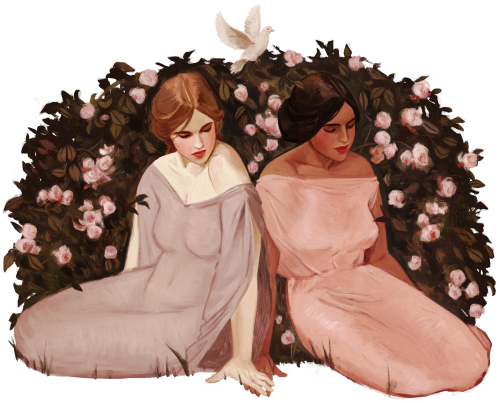
“Rising” by Trista Mateer is softer than the first two artworks in that there is a beautiful balance in the same book. Mateer presents an image of love and fascination in “Rising” that is touching in its simplicity. This is contrasted with the fear and rejection presented in the first two pieces. The interplay between the two builds a truth of a lesbian relationship. The image of Sapphos and Aphrodite depicts the two women turning slightly away from each other but still making contact along their arms and with their hands. The woman on the left is gently touching the hand of the right figure and looking over as if in tentative curiosity and is clearly desiring the other woman. The woman on the right looks away but maintains contact by leaning into the left figure. There is a sensuality in that you can see the figures of the women through their attire and their bodies are natural which is clear in that the left woman has a stomach. The poem clearly states the desire and connection between the women: there is infatuation clearly expressed in that Sappho is unable to weave because she is overcome with longing for an Aphrodite. While unclear “sweet mother” seems to be directed towards a goddess or as a general expression to the divine although here made to a divine woman.
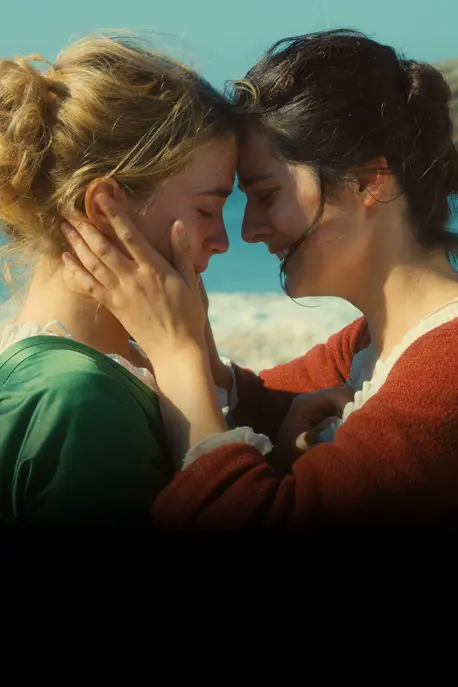
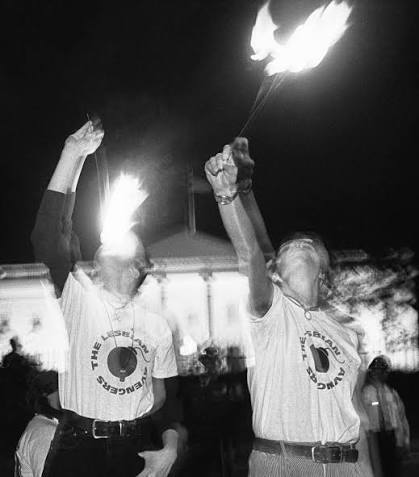
Continuing, A Portrait of a Lady on Fire is a tender relationship, but societal expectations did not allow for homosexual relationships and the two women were torn apart. This piece reintroduces the harsh truths sustained from for 18th century when the film was set, into the present day. The women are isolated from much of societal resentment on the island, but it ultimately separates the couple. Also, in conversation with the past, the image of the Lesbian Avengers introduces a lesbian rights social movement organization in the 1990s that (George, 2021). The Lesbian Avengers not only fought for lesbian rights, but they also assisted the Gay Movements in the AIDs Crisis and Abortion Rights within the feminist movement even with the Lavender Menace and when their contributions were persistently omitted.
The final work in the collection is She”, a song written by Dodie Clarke. The beautiful imagery in the song paired with Dodie’s gentle voice in lines such as “cause she tastes like birthday cake, and storytime, and fall/ But to her I taste of nothing at all” conveys this tentative longing. Society presupposes heterosexuality and therefore, complicates navigating the world as a lesbian as one must continually come out to those around them and fear rejection, in this case, between Dodie and her friend. She struggles with her affection and chooses to “admire her from afar”, and, on conversation with the line “she means everything to me”, Dodie expresses her fear of losing her friend and decision to value her friendship over a relationship. “She” closes the collection with a reminder of longing and the importance of companionship.
This anthology produces an image of the lesbian experience through stories of longing, love, fear, resistance, and rebellion. The pictures present a diverse representation of love in lesbian relationships and their perseverance in the face of homophobia –both external and internal– and societal rejection. Each of the artworks serves as a reminder to the lesbian community of their strength and resilience.
Work Cited
BFI. RAFIKI BFI Flare Special Presentation | BFI London Film Festival 2018. YouTube, 23 Oct. 2018, www.youtube.com/watch?v=MAxF6JCkFL8. Accessed 8 Nov. 2021.
Clarke, Dodie. “She.” Human, The Orchard, 21 Sept. 2019.
George, Cassidy. “An Oral History of the Lesbian Avengers”. The Cut, 25 June 2021, www.thecut.com/2021/06/lesbian-avengers-and-the-dyke-march.html.
Mateer, T. Aphrodite made me do it. Central Avenue Publishing, 2019.
Mohtz. “◌”. tumblr, 14 Apr. 2018, mohtz.tumblr.com/post/172926258431/sweet-mother-i-cannot-weave-slender-aphrodite.
Portrait of a Lady on Fire. Directed by Céline Sciamma, Produced by Bénédicte Couvreur, performances by Adèle Haenel, Noémie Merlant. 2019. Pyramide Films, 2019. Video.